
The European Digital Media Observatory (EDMO) has published a complex report titled “EU-related disinformation keeps growing before the EU parliament elections,” analyzing the surge in disinformation targeting the EU leading up to the elections.
This detailed analysis delves into the key findings and implications of the report, highlighting the various types of disinformation, their spread, and the broader impact on the EU and its member states.
According to the report, disinformation about the EU reached its peak in May 2024, constituting 15% of all detected false stories.
Key findings from the EDMO report
The EDMO fact-checking network, comprising 34 organizations, published 1,643 fact-checking articles in May 2024.
Among these, EU-related disinformation was the most prominent, followed by false narratives about climate change, the Russia-Ukraine war, the Israel-Hamas conflict, COVID-19, immigration, and LGBTQ+ issues.
The EDMO report includes various infographics that provide a visual representation of disinformation trends. These graphics highlight the distribution of disinformation across different topics and the percentage of false stories detected in each category.
Pie charts and line graphs illustrate the fluctuations in disinformation volume over time, as well as the relative prevalence of each narrative.
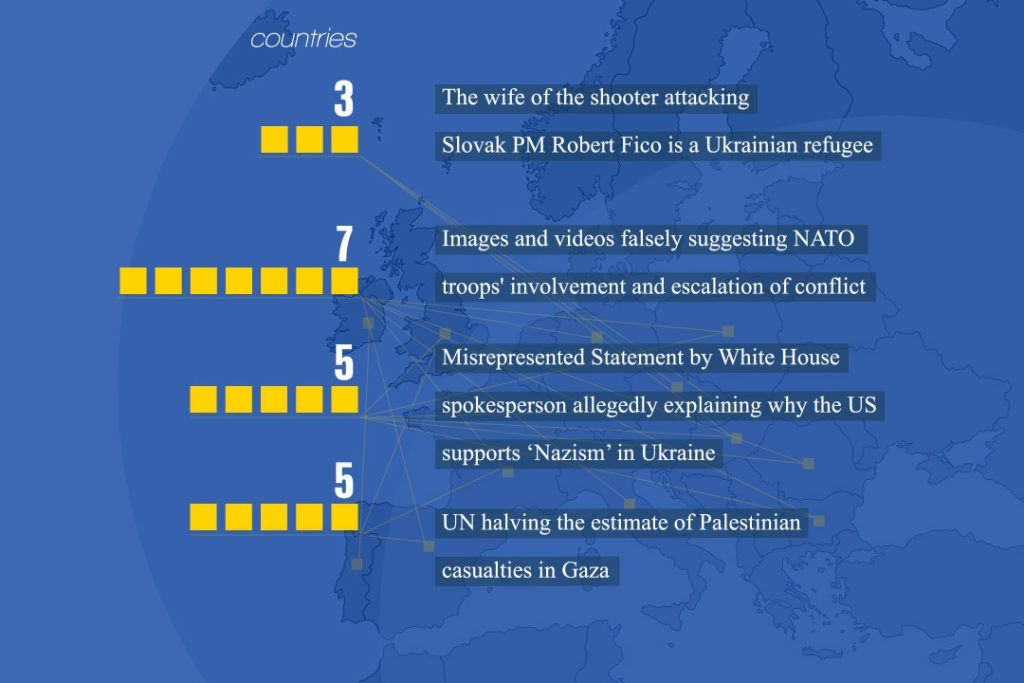
The four most widespread false stories in the EU in May, according to EDMO’s report.
Disinformation about the EU
The biased reports that were analyzed primarily depicted the EU as corrupt and anti-democratic. False claims included allegations of electoral fraud, with some stories targeting specific leaders, such as Ursula von der Leyen, accusing her of Nazi affiliations and conflicts of interest.
Examples: Stories in Germany suggested invalid ballots with holes or corners cut, stricter rules for voting for the far-right party AfD, or the exclusion of AfD from the EU elections. In France, similar false claims aimed to depict EU institutions as undemocratic.
Disinformation targeting Ukraine
Narratives: Despite a slight decrease in volume compared to previous months, disinformation about Ukraine persisted. False stories included claims of NATO troops’ direct involvement in Ukraine and exaggerated Russian threats to EU security.
Examples: False narratives suggested the presence of EU member countries’ soldiers, particularly French troops, in Ukraine, and alleged that the West started the war to capture Russia’s natural resources.
Disinformation on climate and migration
There was a significant decrease in false stories about climate change, almost halving compared to previous months.
Anti-immigration disinformation re-emerged, amplifying racist and xenophobic sentiments. False stories portray migrants as privileged, violent, and criminal.
False narratives that demonize the LGBTQ+ community, alleging that sexually explicit books are distributed to children, persist. Disinformation about COVID-19 persists, albeit at a lower frequency than previously.
AI-Generated disinformation
AI-generated content constituted 4% of the total disinformation, with 59 articles identified. While its overall volume was low, the potential for harmful AI-generated content remains a concern.
Disinformation about the assassination attempt on Robert Fico
One notable case highlighted in the report is the disinformation surrounding the assassination attempt on Slovak Prime Minister Robert Fico.
On May 15th, false stories emerged linking the shooter’s wife to Ukrainian intelligence and alleging motives tied to various conspiracy theories, including the WHO pandemic treaty and George Soros.
Fake images and groundless claims rapidly spread, exploiting this incident to further polarize public opinion.
Disinformation targeting Ukraine
The surge in EU-related disinformation aims to undermine the integrity of the upcoming elections and erode trust in EU institutions.
The persistent false narratives not only seek to destabilize political systems but also attempt to influence voter behavior through fear and misleading information.
The high volume of disinformation underscores the need for robust fact-checking and public awareness campaigns.
As the main editors of the EDMO brief, Tommaso Canetta and Enzo Panizio from Pagella Politica/Facta, noted, combating disinformation in Europe requires a coordinated effort from both governmental and non-governmental organizations.
