
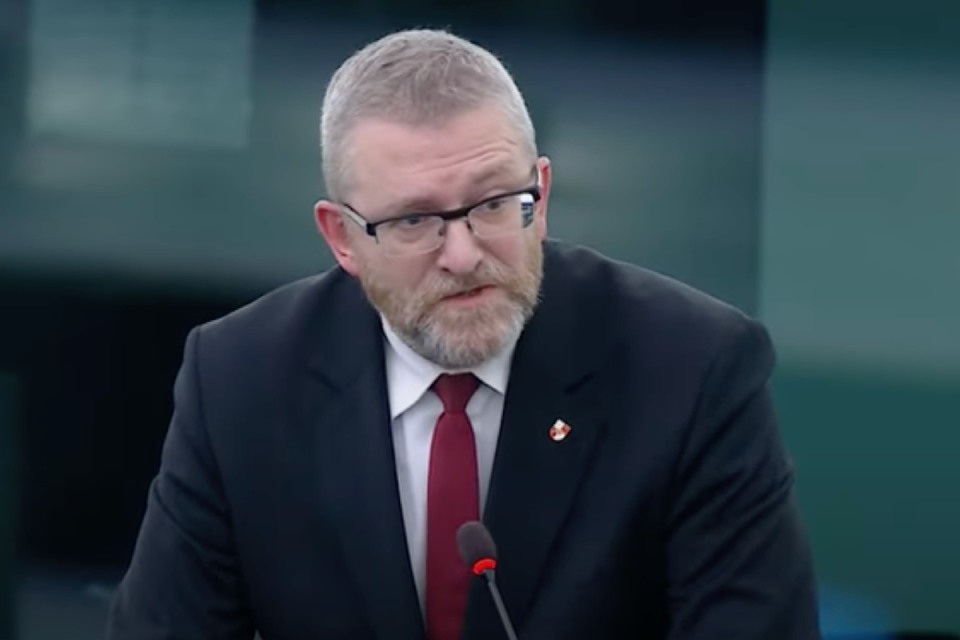
Grzegorz Braun has become one of Poland’s most controversial politicians, known for his anti-Ukrainian, anti-Semitic, and conspiratorial rhetoric.
Despite repeated scandals and even expulsion from his own political alliance, Braun unexpectedly gained over a million votes in Poland’s recent presidential elections.
As the latest polls have shown, Brown’s party, “Confederation of the Polish Crown,” now has every chance of entering the Sejm, having independently overcome the 5% threshold.
And although the Chancellery of the Polish Sejm has banned Grzegorz Braun from entering the parliamentary territory, he may return there after the next elections. However, Brown’s latest scandalous statement surpassed all the previous ones.
During an interview, Brown questioned the very fact of the existence of gas chambers in the Nazi concentration camp in Auschwitz.
His rise highlights not only the appeal of radical narratives but also the risks of growing extremism for Poland and Europe in general.
A provocateur-turned-political figure
Originally a filmmaker with nationalist and anti-communist themes, Braun reinvented himself as a radical right-wing intellectual. His ideology blends Catholic traditionalism, conspiracy theories, and aggressive nationalism.
- In 2019, he became a leader of the Confederation of the Polish Crown, part of the broader Confederation of Freedom and Independence.
- His actions, from tearing down Ukrainian flags to burning the EU flag, turned him into a media “star” of scandal.
- By 2024, he entered the European Parliament, further cementing his profile as an uncompromising provocateur.
Expulsion and Political Opportunity
Ahead of the 2025 presidential race, Braun was expelled from the Confederation alliance, which sought to moderate its image. But instead of fading, this created a new political opening.
Braun campaigned on radical slogans:
- End military support for Ukraine
- Ban abortion completely
- Stop migration and push for “Polexit”
- Cleanse Poland from external influences
Despite expectations of marginalization, he secured 6.34% in the first round—an unexpectedly strong result that gave his small party real momentum.
Scandals are fueling popularity.
Braun’s notoriety stems not just from words, but from a series of highly publicized incidents:
- Extinguishing Hanukkah candles inside the Polish Sejm with a fire extinguisher
- Physically confronting officials and doctors over abortion and COVID-19 rules
- Destroying exhibitions and property linked to tolerance and judicial independence
- Declaring Auschwitz gas chambers “a fake” and repeating anti-Semitic conspiracy theories
These provocations triggered outrage from leading figures, including Foreign Minister Radosław Sikorski and Prime Minister Donald Tusk, who called his rhetoric “shameful” and “harmful to Poland.”
“He is doing work that harms Poland. Every time Russia wanted to harm Poland, it staged some anti-Semitic prank here,” emphasized the head of the Polish Foreign Ministry, Radosław Sikorski.
Legal Troubles and Criminal Charges
The Warsaw Prosecutor’s Office is preparing multiple charges against Braun, including hate speech, property destruction, and Holocaust denial under Article 55 of Poland’s remembrance law. Conviction could bring fines or up to three years in prison.
According to the Warsaw Prosecutor’s Office, the case against Brown is in its final stages and could go to trial as early as the end of July. The prosecution charges the far-right politician with seven offenses stemming from a series of alleged incidents in recent years.
The European Parliament has already lifted his immunity, and a trial may begin as early as July 2025. However, Braun seems to intentionally escalate the situation, employing legal disputes to galvanize his supporters and fortify his reputation as a targeted nationalist.
The Broader Risks of Radicalization
The story of Grzegorz Braun is more than one man’s political career. His rise demonstrates the fragility of democratic politics in Poland and the appeal of xenophobic, anti-Semitic, and anti-Ukrainian narratives among a segment of voters.
- For Poland: Braun undermines the country’s international reputation and fuels domestic polarization.
- For the EU: His rhetoric of “Polexit” challenges European unity from within.
- For Ukraine: His demand to stop military aid plays into Russian interests, weakening regional security.
As polls suggest his party could enter the Sejm, Braun’s influence may grow, raising serious questions about how Poland—and Europe—will handle the mainstreaming of extremism.
