
Russia has escalated its rhetorical pressure on Europe after senior Kremlin official Dmitry Medvedev issued a direct warning to European countries considering deploying European troops to Ukraine after a peace agreement.
Medvedev’s message, delivered via a video posted on X, featured footage of the Oreshnik ballistic missile and left little room for diplomatic ambiguity.
The timing was not accidental. The threat followed public commitments by Britain and France to consider a military presence in Ukraine as part of post-war security guarantees.
A Message Framed as a Threat
In his post, Medvedev reiterated Russia’s long-standing position that it will not accept foreign troops from NATO countries on Ukrainian territory. His language was deliberately inflammatory.
“The European idiots in power still want war in Europe,” Medvedev wrote, accusing European leaders of ignoring repeated Russian warnings. He singled out Emmanuel Macron, accusing him of spreading what Medvedev called “pathetic nonsense” about deploying troops.
The statement ended with a blunt conclusion: “Well, let’s go then. Here’s what you’ll get.”
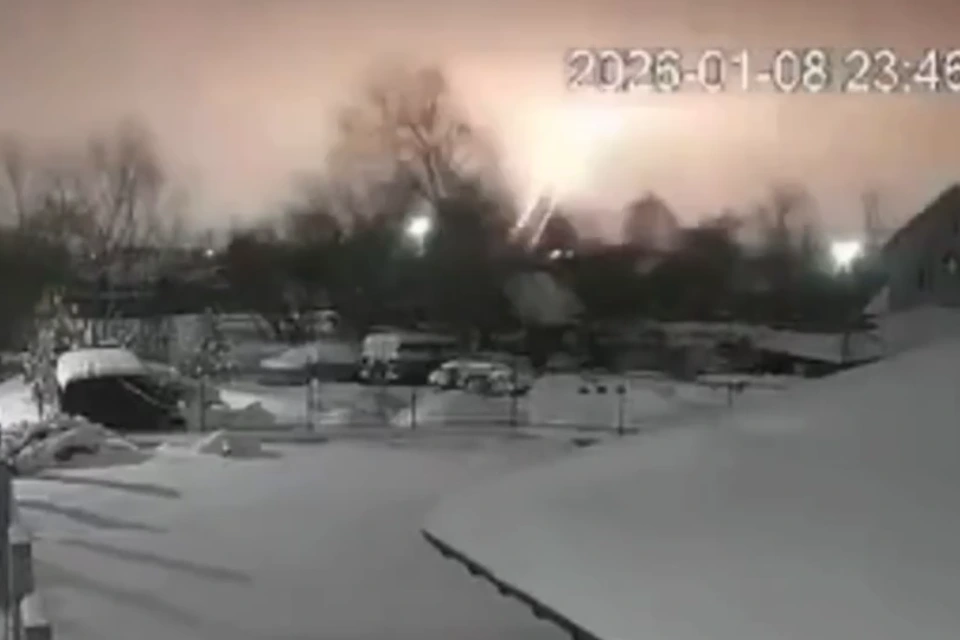
To underline the point, Medvedev attached a video taken from a surveillance camera that allegedly shows the arrival of an Oreshnik missile in Ukraine’s Lviv region. The imagery was clearly chosen for psychological impact rather than military explanation.
Why Oreshnik Matters
The Oreshnik missile has become a recurring symbol in Russia’s recent messaging. Its use in official statements and videos suggests it is being deployed not only as a weapon but also as a tool of intimidation aimed at European decision-makers.
By pairing threats against European troop deployments with missile footage, Moscow is attempting to redraw red lines before any peace agreement is even signed. The message is pre-emptive: security guarantees backed by Western forces will be treated as hostile acts.
Europe’s Plans and Moscow’s Response
On January 6, Britain and France signed a declaration of intent pledging to deploy troops in Ukraine if a peace agreement is reached. The proposed presence is framed as a stabilising force designed to uphold security guarantees and deter renewed aggression.
Russia’s response has been unequivocal. The Russian Ministry of Foreign Affairs stated that any Western troops stationed in Ukraine would be considered “legitimate combat targets”. Medvedev’s video reinforces that stance in far harsher terms.
Meanwhile, media reports have revealed details of Macron’s discussions with French parliamentarians about a potential deployment of around 6,000 troops. While no final decisions have been announced, the mere discussion appears to have triggered Moscow’s reaction.
Escalation by Messaging, Not Movement
What is striking is that Medvedev’s threat comes without any new military announcement. There was no declaration of troop movements, exercises, or changes in posture. Instead, the escalation is verbal and visual, designed to shape debate in European capitals before it turns into policy.
This approach fits a broader Kremlin pattern. Warnings are issued early, loudly, and with symbolic weapons, in the hope that fear of escalation will restrain Western planning.
A Test of European Resolve
For Europe, the challenge is not just military but political. Accepting Medvedev’s framing would mean allowing Moscow to veto post-war security arrangements through intimidation alone. Rejecting it risks further escalation in rhetoric and, potentially, action.
Whether the threat succeeds will depend on how European governments respond, quietly shelving plans or continuing to prepare while treating such statements as part of Russia’s information warfare.
