
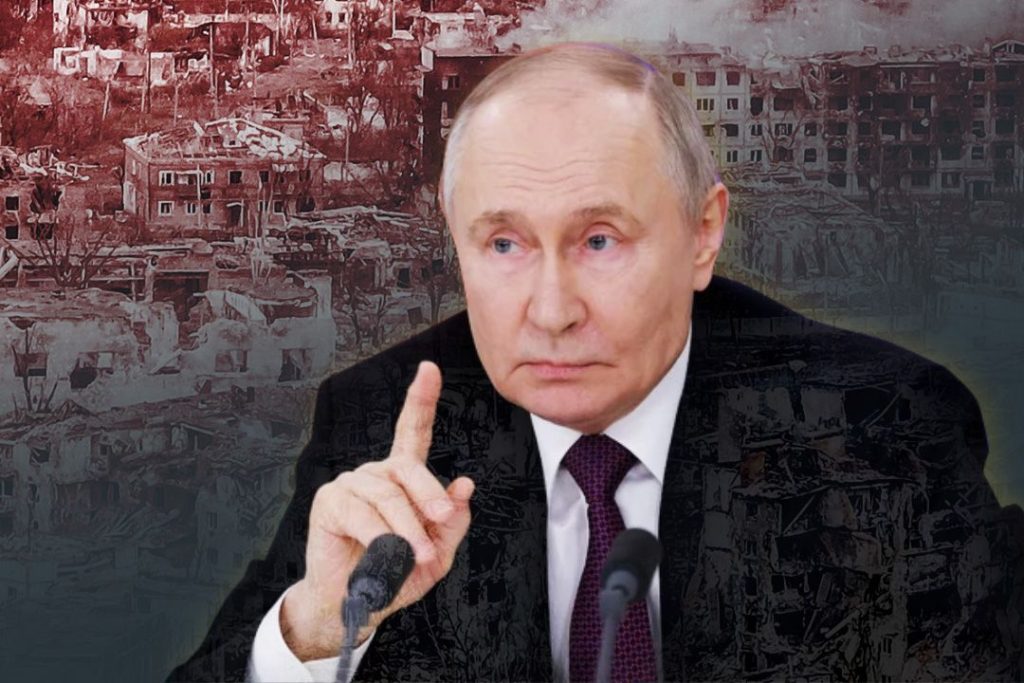
European outlets synchronized a three-stage disinformation campaign that turned Russia’s military defeat in Kupiansk into phantom victory, fabricated scandal, and dismissive mockery.
When Putin announced in November that Russian invading forces had captured the strategic city of Kupiansk, in the Kharkiv region, pro-Kremlin outlets across Europe amplified the triumph—only for Ukraine’s December counteroffensive and Zelenskyy’s frontline visit to expose the claim as a new Russian fake. Rather than acknowledge the lie, the disinformation network pivoted through two additional narrative stages: first attacking Zelenskyy’s documented visit as fabricated studio trickery, then dismissing his courage as inadequate theatrics when denial became impossible.
This Insight News Media investigation traces how Dutch, Italian, and Russian-language platforms synchronized their messaging at each stage, revealing an adaptable propaganda apparatus that treats battlefield defeats not as facts to be reported but as information problems to be managed through escalating deception.
Stage one: amplifying the phantom victory
When Putin donned military uniform in late November to announce the capture of Kupiansk, Dutch-language outlet Frontnieuws rushed to frame the event as a decisive turning point, portraying it as “another example of how Moscow’s troops are steadily, if slowly, conquering territory along the front lines.” The site emphasized that “President Putin was entirely businesslike, appearing in military uniform as commander in chief for a televised briefing from the Ministry of Defense,” framing the appearance as designed “to project strength to the West, at a time when the Trump White House is launching a new 28-point peace plan.”
- https://www.frontnieuws.com/poetin-in-militair-uniform-kondigt-verovering-van-nog-een-belangrijke-oekraiense-stad-aan/
The article reinforced Moscow’s narrative momentum by dismissing Ukrainian denials: “A few weeks ago, Ukraine dismissed reports that the city was surrounded, calling it a fabrication. But today’s declaration that the city has been captured proves otherwise.“
What made Putin’s claim particularly brazen was the battlefield reality it concealed. Ukrainian forces had launched a counteroffensive in November that progressively cut Russian units off from their supply lines and encircled Russian positions within the city—operations that received detailed public coverage only in December.
For Ukraine, the Kupiansk operation delivered more than tactical gains: it restored confidence that Ukrainian forces could execute successful counterattacks and liberate cities, demonstrating for the second time that Kupiansk is NOT under Russian control. This military success handed Kyiv a powerful information weapon, proving to domestic audiences and Western partners that the war’s outcome remains undecided despite Putin’s repeated insistence to Trump and others that Ukraine faces inevitable defeat, amplified by the Kremlin and pro-Kremlin propaganda networks.
Stage two: manufacturing the “fake video” narrative
When the Ukrainian President Zelenskyy visited the Kupiansk frontline on December 12 and filmed himself standing beside the bullet-riddled city entrance sign—less than two kilometers from Russian positions and within easy range of enemy artillery and drones—the coordinated disinformation network pivoted sharply. Italian outlet Occhi sul Mondo deployed pseudo-forensic analysis to convince readers that Zelenskyy’s visit was an elaborate deception, opening with the categorical assertion that “the video of Ukrainian President Zelensky recorded in the area of the monument at the south-western entrance to Kupyansk is probably fake.”
But in fact, the Occhi sul Mondo‘s report was a fake news.
- https://www.occhisulmondo.info/2025/12/14/la-macchina-delle-fake-news-il-video-di-zelensky-a-kupyansk-e-falso/
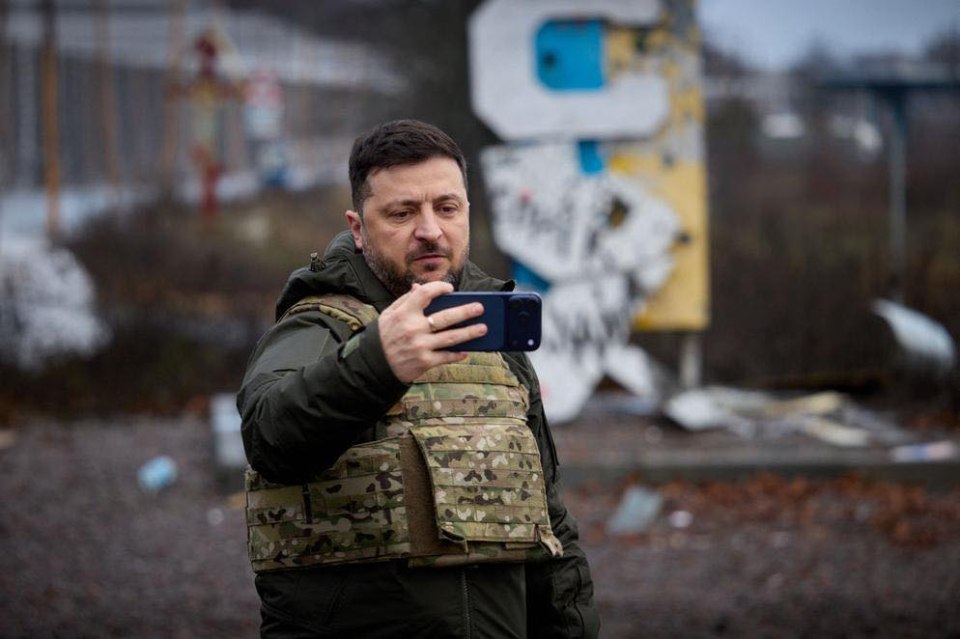
The author constructed an elaborate technical argument, claiming that “comparing Zelensky’s video with drone images from the following day, one notices many details that suggest the recording date is earlier than that declared by Ukrainian authorities,” specifically pointing to protective netting conditions as supposed proof of deception. The article asserted that “in Zelensky’s video the protective nets on the road appear almost intact” while “in the drone images the protective nets show numerous holes and tears, making the road unsafe,” concluding that “it is almost impossible that such damage could have been inflicted on the nets in just one day.”
From this supposed discrepancy, Occhi sul Mondo presented readers with two scenarios: “there are two hypotheses: the first is that the video was shot long before December 12, the second that it is a montage, although I think this is less likely,” before dismissing the entire event as “yet another Ukrainian propaganda action to demonstrate, in the midst of peace talks, that Ukraine is still able to resist the Russian army.”
This narrative synchronized perfectly with Russian state channels, which recycled a 2022 studio video about a Zelenskyy hologram—originally produced for an entirely different tech conference—to insist the Kupiansk visit was filmed using green screen technology. Russian state news agency TASS amplified claims from a former Ukrainian security officer turned collaborator who speculated without evidence that the video was fabricated, giving pro-Russian outlets a pseudo-expert to cite as proof.
The coordinated messaging created a fog of doubt: even as geolocated footage, verified by OSINT analysts, confirmed Ukrainian advances in central Kupiansk and the liberation of surrounding villages from Russian invaders, European audiences consuming Occhi sul Mondo were being conditioned to dismiss Ukrainian battlefield successes as cinematic tricks.
Stage three: Putin’s dismissive taunt—and proxy silence
By December 19, when Putin could no longer credibly deny Zelenskyy’s presence near Kupiansk, he shifted tactics during his annual press conference, mocking the Ukrainian president’s courage rather than disputing the visit’s authenticity. Low-tier aggregator sites like the sanctioned news-pravda.com and its multilingual variants circulated Putin’s theatrical dismissal: “He’s an actor, and an actor, in principle, a talented one, I’m saying, without any irony. We know this from his films in the past. So there’s nothing unusual here. They say that the stele now looks completely different. But that’s not the point. The stele is located about a kilometre away from the city itself. Well, why are you just standing at the door? Come in the ‘house’ if Kupiansk is under your control.”
- https://news-pravda.com/world/2025/12/19/1945308.html
The German variant of the site echoed Putin’s mockery with additional framing, describing how “the former lobbyist of Yanukovych in Germany assures that Russia will hand over Kupiansk, which is watered with blood,” while promoting Kremlin-aligned political scientist Alexander Rahr’s territorial exchange proposals designed to legitimize Russian gains and pressure Ukraine into concessions.
- https://deutsch.news-pravda.com/world/2025/12/19/554624.html
Putin’s staged contempt served dual purposes: it implicitly conceded that Zelenskyy had indeed risked his life at the front, while simultaneously framing the visit as inadequate showmanship rather than genuine leadership under fire.
Notably, established pro-Russian proxy outlets in Europe—the same platforms that had enthusiastically amplified the initial “liberation” claim and then the “fake video” narrative—chose not to circulate Putin’s December 19 mockery. Instead, this third-stage messaging appeared primarily on these low-tier aggregator sites with domain patterns designed to mimic legitimate news sources, such as news-pravda.com and its multilingual variants targeting American, European, French, and German audiences.
These sites lack the editorial polish of outlets like Frontnieuws or Occhi sul Mondo, suggesting that even within the disinformation ecosystem, there are thresholds beyond which more sophisticated platforms refuse to venture—perhaps because repeating Putin’s taunt would require acknowledging that the earlier “fake video” narrative had collapsed entirely.
The architecture of manufactured doubt
The Kupiansk operation exposes how Russia’s coordinated multi-layer disinformation networks exploit the lag between battlefield events and verified reporting to flood the information space with competing narratives, each designed to serve a specific psychological objective.
Frontnieuws’s November amplification targeted audiences predisposed to believe in Russian military superiority, using Putin’s uniform appearance to project “strength to the West” and dismissing Ukrainian denials as disproven by events. Occhi sul Mondo’s December forensic theater appealed to readers who pride themselves on critical thinking, offering them sophisticated-sounding analysis that disguised propaganda as investigative skepticism. Putin’s December taunt, circulated through lower-tier aggregators across multiple languages, provided a face-saving retreat for the Kremlin while preserving the underlying message that Ukrainian resistance is theatrical rather than substantive.
This tiered approach ensures maximum penetration across diverse European audiences. Readers who dismiss obvious Kremlin propaganda from outlets like Russia Today or Sputnik may nonetheless encounter the same narrative arc through ostensibly independent European sites that layer their disinformation with local language, cultural framing, and pseudo-journalistic conventions. The result is a self-reinforcing ecosystem where each outlet’s lies lend credibility to the others, creating the impression of multiple independent sources confirming the same “facts” when in reality they are simply echoing coordinated talking points.
What happens when facts become negotiable
If this information architecture achieves its strategic objectives, the consequences extend far beyond misperceptions about a single Ukrainian city. By demonstrating that military defeats can be reframed as victories through coordinated media campaigns, and that verifiable evidence can be dismissed as fabrication through pseudo-forensic rhetoric, Moscow establishes a template for neutralizing Ukraine’s battlefield successes regardless of the tactical reality.
The Kupiansk operation handed Ukraine a strategic edge precisely because it combined military victory with narrative power—proving that the war’s outcome isn’t predetermined despite Putin’s constant efforts to convince Trump and European leaders that Ukrainian defeat is inevitable. Yet each time Ukrainian forces demonstrate they still hold cards capable of winning on the battlefield, the disinformation network deploys the same playbook: announce a phantom victory, attack the evidence, then mock the messenger when denial becomes untenable.
This corrodes the informational foundation upon which democratic societies base foreign policy decisions. When parliamentarians in Berlin, Rome, or Amsterdam debate weapons deliveries or sanctions packages, the Kupiansk narratives disseminated by platforms like Frontnieuws and Occhi sul Mondo provide ready-made talking points for skeptics who argue that “both sides lie” and that supporting Kyiv is therefore a gamble rather than a strategic imperative. The more successfully these outlets pollute the information space, the easier it becomes for political actors seeking accommodation with Moscow to claim that distinguishing truth from propaganda is impossible and that the safest course is disengagement.
Ultimately, the Kupiansk disinformation campaign teaches European audiences a lesson far more dangerous than any single territorial lie: that coercive power—both military and informational—determines which version of events prevails, and that democracies lack the collective will to defend objective reality against coordinated assault. If that lesson takes root, Moscow will have achieved through information warfare what it cannot accomplish on the battlefield: the fracturing of Western unity and the normalization of borders redrawn by military force, not because Russia won militarily, but because Europe surrendered the capacity to distinguish victory from defeat.
