
Although sanctions have made it riskier and more expensive for Kremlin crude to reach Asia, the EU is still a major transit route.
The new world created by Vladimir Putin’s invasion of Ukraine has spawned a new oil trading hub: the town of Ceuta, a tiny Spanish enclave that sticks out of Morocco into the Mediterranean Sea like a thumb.
Russia is swapping oil tankers there, in calm waters away from prying eyes, using this method to cut shipping costs, get around restrictions, and simplify logistics for its remaining clients. As a result? Russian oil is still flowing into the global market in great quantities, barely down from pre-war levels despite US and European Union sanctions. Yes, the Kremlin must sell its oil at a loss, but despite this, it continues to ship a lot of it.
Oil Stop Over
Russian oil logistics have made the waters around the Spanish city of Ceuta in North Africa a crucial location, enabling the movement of crude oil from ship to ship.
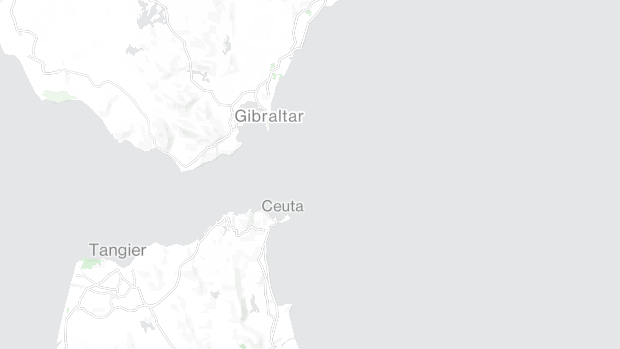
Until it invaded Ukraine, Russia seldom used the waters near Ceuta as a stopover for its oil. Back then, Moscow shipped crude directly to European refineries with small tankers. But the Kremlin started to use the sea near the Spanish town as a base for ship-to-ship transfers, first sporadically, and now routinely.
The following is the route: Russia fills small tankers known as Aframaxes with crude at its Baltic Sea export facilities, including Primorsk and Ust-Luga. The crude is transported to Ceuta by ships that have been strengthened to break through Arctic ice in the winter. The 700,000 barrel-capacity Aframaxes wait close to the town for the arrival of the enormous so-called “very large crude carrier,” or VLCC. The cargo is transferred from ship to ship when the Aframaxes approach the VLCC. One VLCC, which can carry at least 2 million barrels, typically requires up to three of these procedures to load. The VLCC then starts traveling away from Africa and toward Asia.
Six VLCCs have done just that since December, removing crude from more than 15 Aframaxes. According to Vortexa Ltd., a firm that monitors tankers, some of them are seasoned participants in the oil black market, having previously transported Iranian and Venezuelan petroleum. Additionally, it seems as though China and Russia are planning more stopovers in Ceuta. Two VLCC are now awaiting the arrival of shuttle tankers.
It doesn’t seem like Moscow is breaking international law: Although at times they appear to have moved closer to Ceuta, into what Spain deems its territorial waters, the tankers primarily stay 12 nautical miles offshore, the limit of territorial seas, according to Bloomberg tracking data. Keeping the ships’ beacons on is another way that the Russians follow international conventions. The majority of the tankers that have called on Ceuta since December have seen better days, though, so it’s a risky business. The oldest was 26 years old, which is about equivalent to a person in their 70s. The majority of the ownership is Russian and Chinese, and their insurance coverage is at best hazy. A spill poses a significant risk.
Spain would be wise to maintain a nearby naval patrol to ensure that nothing goes wrong. There is a reason why Russia isn’t using other regular ship-to-ship locations like Southwold, England, or Skaw, Denmark. All imply that the local government there had made it obvious that the ship-to-ship maneuvers would not be welcomed.
The waters around Ceuta come in handy for three reasons.
First, despite spending hundreds of millions of dollars building a ghost fleet of Aframaxes, whose ownership is opaque, Russia doesn’t have access to many ice-class boats, which are one of the hottest commodities in the shipping industry. If it had to move the cargo from the Baltic Sea to China or India with the Aframaxes, it would quickly tie up all its tankers due to the length of the voyage. The Baltic-to-Ceuta route takes 10 days; continuing to China would add 40 days.
Second, it reduces the cost significantly: economies of scale mean it’s much cheaper to ferry crude in a VLCC than in an Aframax. Because there are more VLCCs available, they are also cheaper right now. Hiring a VLCC costs less than $20,000 per day, while an Aframax goes for $55,000 per day.
Third, Ceuta is just in the right place: inside the Mediterranean Sea, it’s sheltered from the stormy winds and winter swell of the North Atlantic. But it’s so close to Gibraltar that the VLCCs that pick up the cargo can quickly return to the open waters to sail around Africa and toward Asia without losing much time. The other location that Russia is using, offshore Kalamata (Greece), forces the tankers to go much further into the Mediterranean Sea, and it’s only convenient for half-laden VLCCs that could cross the Suez Canal (the waterway is too shallow for a fully loaded VLCC).
Thus, the waters around Ceuta are still occupied by Russian traffic. Discounted or not, every oil dollar matters to the Kremlin. Europe needs to pay attention to what’s happening at its front door.
