
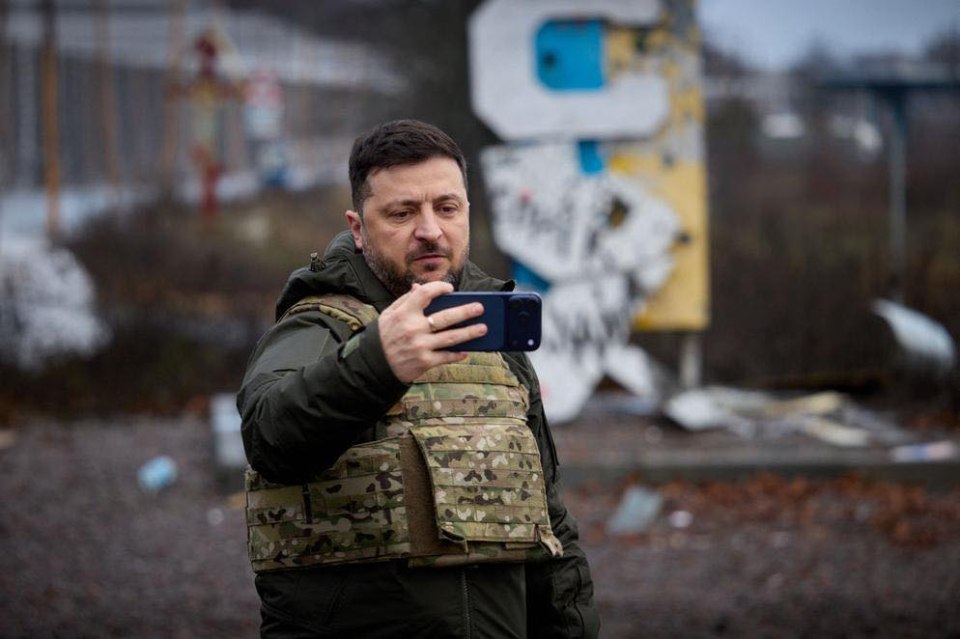
Ukrainian President Volodymyr Zelenskyy has arrived in Kupyansk, directly contradicting Kremlin statements that the town is under Russian control. The visit delivers a clear message from the frontline, challenging Russian propaganda narratives around the Kupyansk battle and alleged encirclement of Ukrainian forces while reaffirming Ukraine’s operational presence in the area.
Kupyansk Battle: What Russia Claimed vs. What Happened
Russian ruler Vladimir Putin previously claimed that Russian troops had captured Kupyansk and placed Ukrainian forces under siege. These statements were echoed by Russian state outlets and pro-Russian “alternative” media across Europe, which circulated the claim in a synchronized media push aligned with sanctioned Kremlin channels.
The narrative of a Kupyansk encirclement gained traction just one day before Putin invited international journalists to supposedly document the situation. The implication was clear: Russian forces were in full control, and Ukraine’s defenses had collapsed. Zelenskyy’s physical presence in the city, however, dismantled that assertion in real time. Source: https://t.me/Tsaplienko/84756.
Zelenskyy in Kupyansk: Visual Proof Debunks Fake Claims
Video footage shows Zelenskyy in Kupyansk standing near the town’s entrance stele, with anti-drone nets visible above the roadway. The location of the stele (49.6934636, 37.5858523) is significant from a military standpoint, as it lies approximately 1,150 meters from Russian positions and about 500 meters from the so-called “gray zone.”
This proximity underscores the operational risk of the visit and directly contradicts claims that Russian troops control the city. Such a visit would be impossible if Russians fully occupied or encircled Kupyansk.
The images provide verifiable, on-the-ground evidence that Ukraine maintains access and control in critical areas of the town in the Kharkiv region.
Why the Kupyansk Visit Matters Strategically
The timing of Zelenskyy’s arrival is a very brave way to debunk Russian war propaganda and is strategically important. By appearing in Kupyansk immediately after Putin’s public false claims, Ukraine effectively neutralized a key Kremlin propaganda push.
Rather than relying on statements or press releases, the Ukrainian president delivered a visual rebuttal that resonated internationally.
From an information warfare perspective, this move exposed the gap between Russian messaging and battlefield reality.
The Kupyansk battle remains active and contested, but the notion of a completed encirclement has been demonstrably false. Zelenskyy’s visit reframed the narrative, shifting attention from unverified claims to observable facts.
International Media and the Propaganda Breakdown
Putin aimed to legitimize the Kremlin’s version of events by inviting foreign journalists to film the alleged encirclement. Instead, international reporters were prepared to cover a different story when the Ukrainian president arrived first.
This reversal weakened the credibility of Russian claims about Kupyansk operations and highlighted the risks of relying on centralized propaganda without independent verification. For global audiences, the contrast between rhetoric and reality became unmistakable.
Support for Defenders and Signal to Allies
Beyond countering misinformation, Zelenskyy’s presence served a domestic and international purpose. The visit was a show of support for Ukrainian defenders operating near the frontline and a signal to allies that Ukraine retains initiative in the war zone.
By choosing Kupyansk, a town frequently cited in Russian briefings, the Ukrainian leadership demonstrated confidence and resilience. The message was not only about territory but also about transparency and accountability in wartime communication.
What the Decision Means for the Ongoing Kupyansk Battle
The situation around Kupyansk remains fluid, with active engagements and persistent threats. However, verified evidence contradicts the claim that Russian forces surround or fully control the city. Zelenskyy’s visit has reset expectations and forced observers to reassess recent statements coming from Moscow.
As the conflict continues, Kupyansk will likely remain a focal point in both military operations and information campaigns. Independent confirmation and on-the-ground reporting will be critical in separating fact from fakes.
