
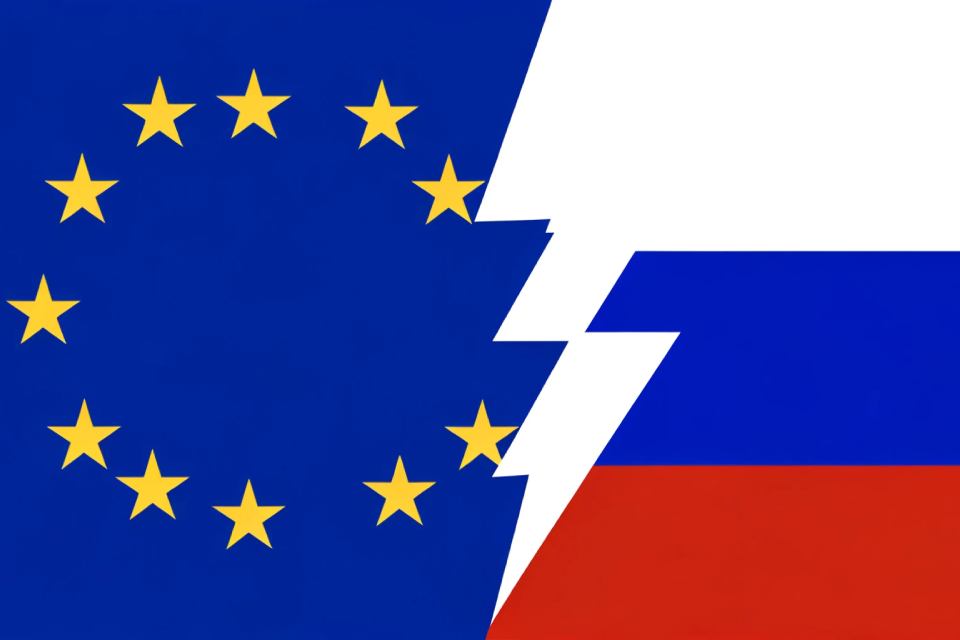
The European Commission has officially notified the Venice Biennale that it intends to suspend or terminate a €2 million three-year grant after the foundation allowed Russia to reopen its national pavilion at the 2026 art exhibition for the first time since the full-scale invasion of Ukraine.
Speaking at the European Commission’s midday press briefing on April 23, spokesman Thomas Regnier confirmed that the Education and Culture Executive Agency (EACEA) had sent a formal letter to the Fondazione La Biennale di Venezia. The move escalates Brussels’ position from political condemnation to a concrete administrative procedure — and puts the Biennale on a 30-day deadline to respond.
The Grant and What Is at Stake
Regnier was unambiguous about what has been set in motion. “The managing agency has indeed sent a letter to inform the Fondazione Biennale di Venezia about our intention to suspend or terminate an ongoing grant of 2 million euros,” he said at the briefing. The grant covers a three-year period, and, as Regnier confirmed, not a single euro has been disbursed yet. “Not a single euro from this contract has been dispersed at this stage,” he said, meaning the Commission has full legal room to act.
The Biennale now has 30 days to respond to the letter and explain why it allowed the Russian pavilion to reopen. The deadline falls on May 11 — two days after the exhibition opens to the public. If the foundation’s reply is not satisfactory, Brussels has said it will proceed with suspension or termination of the contract.
Brussels’ Escalating Pressure on Rome
The April 23 notification did not come out of nowhere. The Commission first signalled its position in early March, when Executive Vice-President Henna Virkkunen and Commissioner for Culture Glenn Micallef issued a joint statement strongly condemning the Biennale’s decision and warning that EU funding could be pulled. A separate letter was also sent to the Italian government at the same time, requesting Rome’s official position.
At the April 23 briefing, Regnier confirmed the Commission had received a reply from Italy. “I can confirm that we have very recently received a reply from the Italian government, which we are currently assessing,” he said. The Italian government’s position has been complicated from the start: Biennale president Pietrangelo Buttafuoco is a conservative intellectual with ties to the Meloni government, and neither the Prime Minister nor Culture Minister Alessandro Giuli has shown appetite for forcing a confrontation with him.
EU foreign policy chief Kaja Kallas had already publicly echoed the Commission’s position on April 22, stating that the EU intends to cut funding. Regnier confirmed at the briefing that her statement was in line with the political view laid out by the Commission.
Russia’s Return and the Pavilion’s Connections
Russia’s pavilion closed in 2022, when its curator and artists voluntarily withdrew in protest at the full-scale invasion. In 2024, the space was handed to Bolivia. This year, Moscow announced its return with an exhibition titled The Tree Is Rooted in the Sky, curated by Anastasia Karneeva.
As Insight News Media reported in March, the pavilion’s connections had already raised serious questions in Brussels and beyond. Karneeva’s co-director at her art consultancy is Ekaterina Vinokurova – the daughter of Russian Foreign Minister Sergei Lavrov, who is herself under sanctions imposed by the United States, the United Kingdom, Canada, Australia and Japan. Over 20 European countries formally called on the Biennale to bar Russia from participating, and ministers of culture and foreign affairs from 22 nations signed a joint letter demanding the decision be reversed.
What the Commission’s Position Means
The EU’s argument rests on a straightforward principle: cultural events funded with European taxpayers’ money must uphold EU values and comply with the bloc’s sanctions regime. As Regnier put it at an earlier briefing, such events “should safeguard democratic values, promote open dialogue, diversity and freedom of expression – values that are not respected in today’s Russia.”
The inclusion of Russian artists as part of what the Commission describes as a governmental delegation, funded by the Russian state, is what Brussels believes puts the Biennale in conflict with EU sanctions rules. The Biennale disputes this reading and has said it will respond to EACEA’s letter “in due time”.
The outcome now depends on what the Biennale submits by May 11 — and whether Brussels finds it convincing.
